Bones & Joints · Gummies

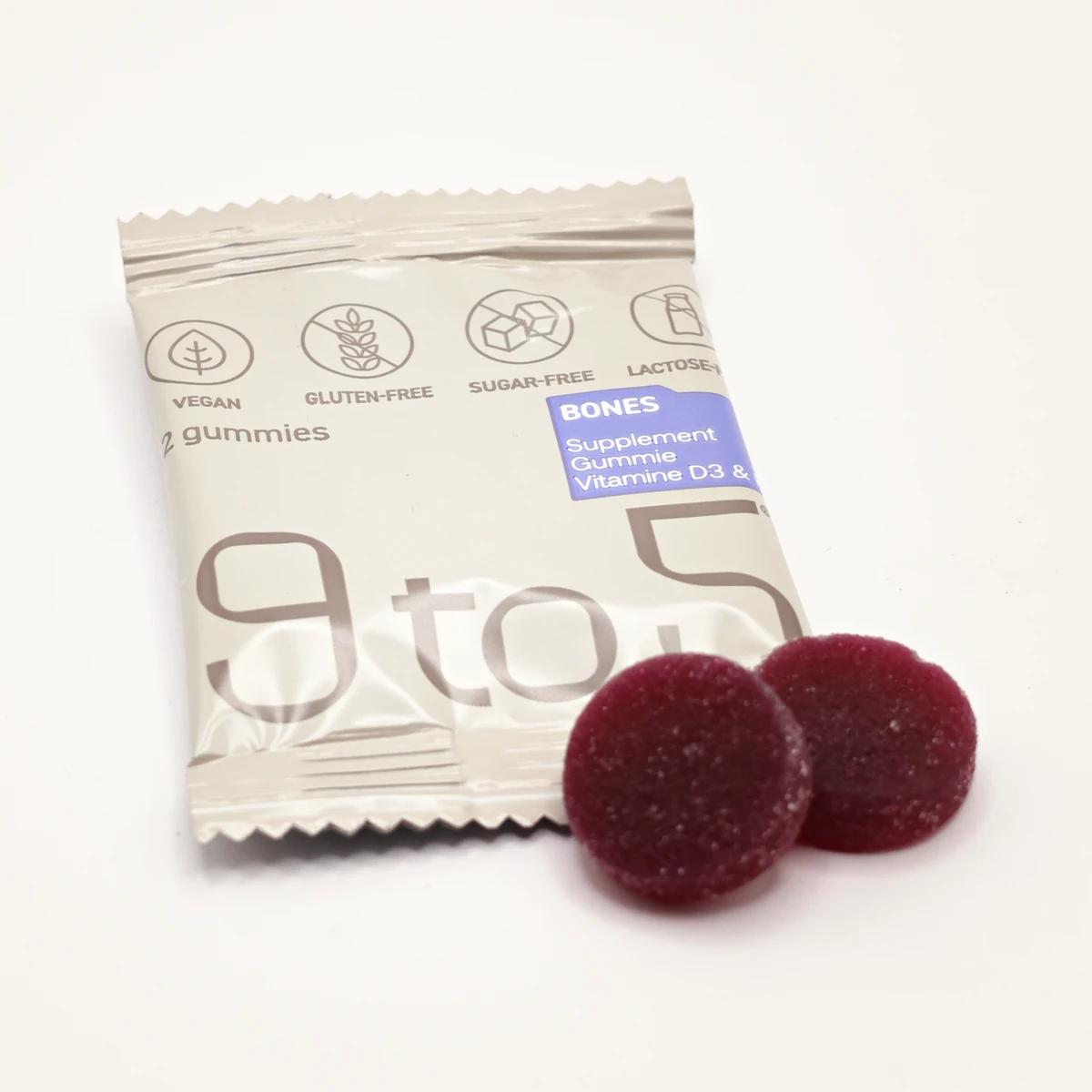
Bones Supplement Gummie Vitamin D3 & K2

Are there days when you barely see the sun?

A combination that contributes to maintaining bone health. Vitamins D and K help maintain normal bone health.

Food supplement for healthy adults.

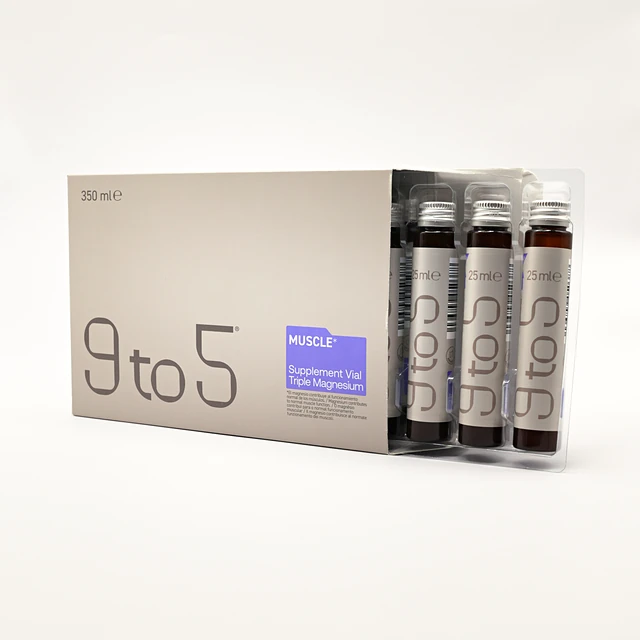
The Bones Supplement Gummie pack: Vitamin D3 & K2

How to use it

  • Serving2 gummies

How to take Bones – Vitamine D3 & K2?

The recommended daily serving is two gummies. Follow the product’s directions and do not exceed the recommended dose. If you are taking medication, using other vitamin D supplements, or are unsure whether this dose is suitable for you, consult a healthcare professional.

What’s inside

Tap on each ingredient to learn more.

Bone health – Vitamin D3, Vitamin K2

Why is it included?

Vitamins D and K help maintain normal bone health.

What is it?

Vitamin D3 and vitamin K2 are fat-soluble vitamins involved in different processes related to bone metabolism¹.

Muscle function – Vitamin D3

Why is it included?

Vitamin D helps maintain normal muscle function.

What is it?

Vitamin D exerts its functions through receptors found in different tissues throughout the body, including muscle tissue¹.

Calcium absorption – Vitamin D3

Why is it included?

Vitamin D contributes to the normal absorption and utilisation of calcium and phosphorus and to the maintenance of normal blood calcium levels¹.

What is it?

Calcium is the most abundant mineral in the body and one of the principal components of bones.

Composition and dose per daily dose, 2 gummies
Vitamin D50 µg · 1000% NRV*
Vitamin K37.5 µg · 50% NRV*

NRV: Nutrient Reference Values.

Allergens

Contains no allergens.

Warnings

Food supplements should not be used as a substitute for a varied and balanced diet or a healthy lifestyle. Do not exceed the expressly recommended daily dose and keep out of reach of young children. Excessive consumption may produce laxative effects.

Contraindications

People undergoing treatment with vitamin K antagonist anticoagulants, such as warfarin or acenocoumarol, should consult their doctor before consuming this product, as vitamin K2 may interfere with their anticoagulant effect.

Education

Eye-opening fact

Did you know that sunlight through a window does not help your body produce vitamin D?

Even if you are sitting beside a window and exposed to sunlight, the UVB radiation needed to produce vitamin D in the skin does not pass through glass¹. Therefore, sunlight through a window is not equivalent to direct exposure².

Myth vs. reality

Myth:
“If it is sunny, my skin always produces the same amount of vitamin D.”

Reality:
Vitamin D synthesis does not depend solely on whether the sun is shining. The season, time of day, amount of skin exposed, and even skin pigmentation can influence how much vitamin D the body can produce³.

Top ingredient

Did you know that some bacteria also produce vitamin K2?

Menaquinones, collectively known as vitamin K2, are primarily of bacterial origin. This is why they can be found in certain fermented foods, such as some cheeses⁴.

9to5 tip

Find opportunities to get outdoors.

If you spend most of your workday indoors, use a break to step outside. Having coffee outdoors, going for a short walk, or making a phone call while walking are simple ways to add more time outside during your workday.

References (5)

What’s inside

1. Commission Regulation (EU) No 432/2012 of 16 May 2012 establishing a list of permitted health claims made on foods, other than those referring to the reduction of disease risk and to children’s development and health. Text with EEA relevance. OJ L [Internet]. 16 May 2012. Available from: http://data.europa.eu/eli/reg/2012/432/oj

Education

1. National Institutes of Health, Office of Dietary Supplements. Vitamin D: fact sheet for health professionals [Internet]. Bethesda (MD): National Institutes of Health; 2025 [updated 27 June 2025; accessed 27 August 2026]. Available from: https://ods.od.nih.gov/factsheets/VitaminD-HealthProfessional/

2. Duarte I, Rotter A, Malvestiti A, Silva M. The role of glass as a barrier against the transmission of ultraviolet radiation: an experimental study. Photodermatol Photoimmunol Photomed. 2009;25(4):181-184. doi:10.1111/j.1600-0781.2009.00434.x..

3. National Institutes of Health, Office of Dietary Supplements. Vitamin D: fact sheet for health professionals [Internet]. Bethesda (MD): National Institutes of Health; 2025 [updated 27 June 2025; accessed 27 August 2026]. Available from: https://ods.od.nih.gov/factsheets/Vitamind-HealthProfessional/

4. National Institutes of Health, Office of Dietary Supplements. Vitamin K: fact sheet for health professionals [Internet]. Bethesda (MD): National Institutes of Health; 2021 [updated 29 March 2021; accessed 27 August 2026]. Available from: https://ods.od.nih.gov/factsheets/Vitamink-HealthProfessional/

Origin / why

The fact

8 in 10 people who work indoors have vitamin D deficiency¹.

Sound familiar?

Do you arrive at work during daylight and leave when there is hardly any sunlight left?

Offices, warehouses, production facilities. Many working days are spent almost entirely indoors with few opportunities for sun exposure, especially during autumn and winter.

The bridge

That is why we developed Bones Supplement Gummie – Vitamine D3 & K2: a vegan formula with vitamin D and K2 designed to complement your diet when you spend much of the day indoors and have limited sunlight exposure.

A combination that contributes to maintaining bone health. Vitamins D and K help maintain normal bone health. Vitamin D also supports normal absorption and use of calcium and phosphorus and maintains normal muscle function².

References

1. Sowah D, Fan X, Dennett L, Hagtvedt R, Straube S. Vitamin D levels and deficiency with different occupations: a systematic review. BMC Public Health. 2017;17:519. doi:10.1186/s12889-017-4436-z.

2. Commission Regulation (EU) No 432/2012 of 16 May 2012 establishing a list of permitted health claims made on foods, other than those referring to the reduction of disease risk and to children’s development and health. Text with EEA relevance. OJ L [Internet]. 16 May 2012. Available from: http://data.europa.eu/eli/reg/2012/432/oj

Jordina CasademuntJordina Casademunt9to5 Nutritionist

“Sun exposure is our main source of vitamin D, but we cannot always be sure that it is sufficient. Maintaining an adequate intake through the diet and considering supplementation when necessary can help us meet our needs.”

Tina, our Master of Pharmacy, explains the Bones & Joints range

Bones & Joints

More in this area.

All 25 products